Music Practice Journal: A Simple Session Template
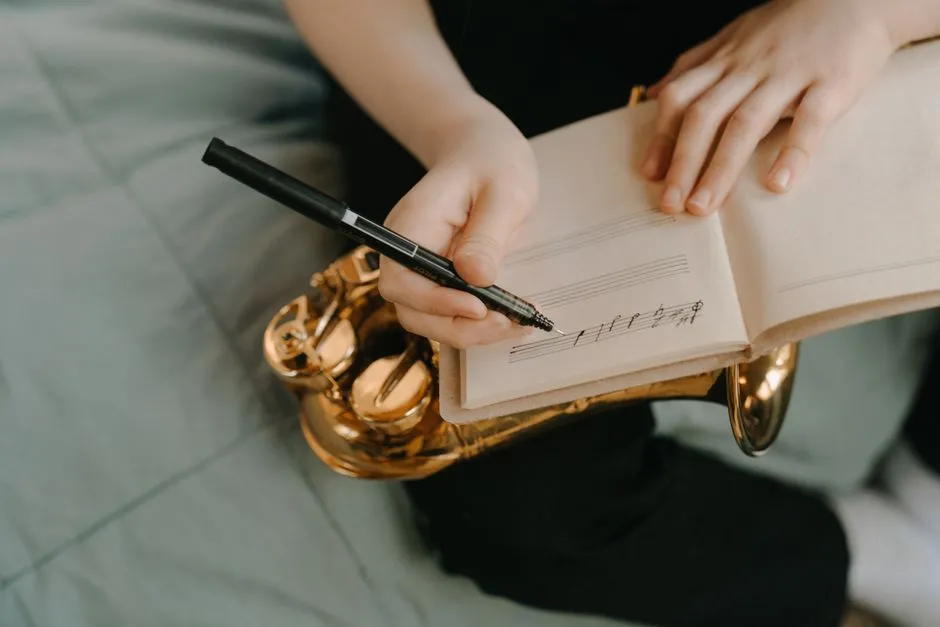
Plan one target, record evidence, and name the next step
A music practice journal should record the date, available time, one session target, the material practiced, the method used, observable results, and the next action. Keep entries short enough to complete after every session. “Practice scales” is a topic; “play the A-major scale evenly at a comfortable tempo three times” is a task with an ending.
The templates in practice systems make the work visible without requiring a spreadsheet to applaud.
Start with a six-line template
Use these fields:
| Field | Example of useful detail |
|---|---|
| Date and duration | Actual start, finish, and breaks |
| Target | One passage, technique, sound, or memory task |
| Starting point | What happened on the first honest attempt |
| Method | Slow loop, rhythm change, isolated transition, recording |
| Result | What became more consistent or remained unstable |
| Next step | Exact place and method for the next session |
Write duration from the clock rather than rounding every session upward into the heroic zone. Breaks can be recorded separately because elapsed time and active playing answer different questions.
Define a target you can hear or observe
Good targets describe behavior:
- enter cleanly after the eight-bar rest;
- keep the repeated rhythm even at a comfortable tempo;
- play the four-bar phrase from memory, then verify the score;
- produce three relaxed attacks without extra noise;
- sing the inner line before playing the full texture.
Avoid goals such as “master the piece” for one session. Mastery has no obvious stop button and tends to eat lunch.
Choose a difficulty and pace that allow comfortable technique. Pain, numbness, tingling, weakness, dizziness, or hearing discomfort are reasons to stop and seek appropriate professional guidance, not entries to overcome by stubbornness.
Record the first attempt before fixing it
Play the target once under normal conditions. Note the specific breakdown: missed transition, uneven pulse, uncertain fingering, memory gap, breath problem, noisy release, or something else.
Do not diagnose the cause from one attempt. Write a testable question: “Does the transition remain uneven when the two beats are looped slowly?” Then use one method and observe what changes.
Change one practice variable
Useful methods include reducing tempo, shortening the loop, changing rhythm, blocking notes, separating hands or voices, singing a line, removing the metronome temporarily, or making a short recording. Choose methods appropriate to the instrument and instruction you have received.
Keep equipment within its operating guidance and sound at a comfortable level. A metronome number is not a moral score. Record it only when the beat is actually being followed with the intended technique.
End with evidence, not mood alone
Mood matters, but pair it with an observation. Instead of “terrible session,” write “the transition failed on two of three comfortable attempts after twenty minutes; next time begin with the left-hand change alone.”
Do not invent percentage improvement from a small, shifting sample. Counts are useful when conditions remain comparable. Three successful repetitions today do not prove permanent learning; they show what happened in this session.
The three-pass album method can sharpen descriptions of texture and form, while deep listening supplies listening questions for recordings of your own practice.
Review once a week or at a natural checkpoint
Read recent entries and mark:
- targets that repeatedly return;
- methods that produced a clear change;
- problems that need a teacher’s help;
- repertoire receiving too much or too little attention;
- physical or hearing concerns that require qualified care.
Use the review to choose the next few targets, not to grade your worth as a musician. When a log grows complicated enough to prevent practice, remove fields. The journal is stage crew: useful, mostly quiet, and absolutely not supposed to begin a solo during rehearsal.